Summer in St Ives
Showing posts with label Reflective Diary 09/10. Show all posts

Thursday, 1 July 2010

OVERVIEW of LEARNING and DEVELOPMENT

Scotland, 2010
 “The map is not the territory”[1] – a systemic term apt to describe my struggle to summarize a year’s learning within word limits. Yet there is a need to tell better stories within the constraint of the real world (Pocock, 1995). While there are multiple ways to do this, I decided on the following:

Clinical and Academic Changes

Present of Past Memory[2]

Even though I learnt family therapy theories in my Social Work degree, I forgot most details because of the lack of opportunity to apply in practice. The closest I got subsequently was from my full-time job opportunity in early 2009 when I was oriented via a short USA study trip to the Multisystemic Therapy and Functional Family Therapy. My volunteer work, on the contrary, gave me more exposures; learning from a workshop the application of Structural model for same-sex couples (Greenan, 2009), reading books/ papers such as Greenan and Tunnell (Greenan and Tunnell, 2003), Tomm’s Interventive Interviewing ((1987a, 1987b, 1988) and Pearce’s Coordinated Management of Meaning (CMM) (2004), as well as group supervision experiences of Reflecting Team and Internalising the Other. My understanding of the concepts, however, remained superficial.

Present Perception1

Academic

Three learning outcomes[3] I am pleased with:

1. An ability to explore and give account of personal learning over time
Self-rated increase from 7 to 9
Being able to sustain this in writing and discussion consistently overtime and feeling less anxious or overwhelmed by details, lack of time or discipline at times!

2. An ability to place the development of family therapy in an historical context
Self-rated increase from 2 to 8

3. An ability to describe differences and similarities between approaches in systemic therapy including the theory of change.
Self-rated increase from 3 to 7

The exam preparatory process, especially, pushed me to gain clarity to both 2 and 3,  such as Family Life Cycle, Transgenerational, Milan, Post-Milan, Structural and Strategic Models.

Clinical

What I found most privileged is having the placement that exposed me to three different settings, from children, adults to older adults mental health services. I appreciate my supervisor’s receptiveness to my attempts to apply theoretical learning such as Transgenerational coaching, circular questioning and reflecting conversations, as well as demonstrating her Narrative approaches. I am also encouraged by her support and active participation in my self-reflexive exercises through supervision, case discussions and commenting on my blog.

Coming from an English language-based education in Singapore, language is not an issue for me in therapy work. However, working primarily with British-White families in this placement, I faced some difficulties in understanding some accents and topic of interests that families referred to that maybe very British culture specific. While I dealt by pretending I understood or relying on my supervisor to engage in these conversations, I hope to be more honest and independent in the coming year, especially if I were to face a more culturally diverse clientele, to situate myself in a more comfortable position of not-knowing and use it therapeutically, either as a form of curiosity for further questioning or applying Burnham’s relational reflexivity (2005).

Present of Future Expectations1

Academic

Three areas I feel I need further work on at the MSc Level:

1. Familiarity with a broad range of literature relating to family therapy and systemic practice. I hope to read not just specific journals, but more original sources of the approaches.

2. An ability to evaluate critically some areas of relevant research. As mentioned in my reflection on research, I am still guilty of skipping the parts of methodology and results!

3. Knowledge and skills required in engaging a range of client groups and working with them effectively. I hope to know more about CMM and integrated approaches to work with Social Services and families with same-sex individuals/couples, such as unbalancing, interventive interviewing,  relative influence questioning, etc.

Clinical

I appreciate my supervisor’s pacing allowance for my slow progression from an observer, a reflecting therapist, a co-therapist to eventually a lead therapist. I became aware I had been overly dependent on her as the lead therapist during a session in Jun 2010 when I was asked to be the lead therapist. I felt incompetent when leading the initial engagement and small talk with the family despite – very basic aspects of therapeutic relationship that I had taken for granted as a co-therapist! This reminded me of my role in my family, being the youngest, often reliant on my parents and siblings to initiate talks and make decisions. My past work and volunteer experiences had made me realised that when given the responsibility, I would be able to take up leadership role overtime. This is demonstrated in my ease and competence in taking the lead in the same month with another family I have been seeing for seven months together with another therapist. Moving forward, my challenge is to build and sustain confidence for initial engagement with families I am new to.

Scotland, 2010

 Personal and Professional Changes

A review of my personal and professional changes through the lens of time categorised in three segments:

Oct- Dec

I started this learning journey questioning myself about risk-taking and picked up the term “de-skilled”; I liked my description of this as the need to feel naked before donning fresh clothes. What inspired me initially was how quick and apt two seniors, within the first hour of knowing me at the first Personal and Professional Development (PPD) session, helped create new meaning to my use of planning skills as an overcompensation of my lack of self-confidence, yet I was often impaired by my anxiety and lack of prioritisation. In a way it is a projection of a level of clinical sensitivity I hope to attain in a year’s time when I reach their MSc level.

Jan-Mar

January was the official “launch” month of my blog online. I purposely chose to publish entries two months later to allow time for post reflection and editing. Publishing my clinical learning points and reflective diary on a public blog challenged me to strike a balance between maintaining professional confidentiality and recruiting “witnesses” in my learning, especially with those interested in systemic practice and hopefully extended beyond the geographical boundary of London.

There were more reflections of my academic learning including research, Structural and SFBT models. These are rather impersonal aspects of me, just like the way my coursemates’s first impression of me - being “technical”, which I agree! A more most personal portion is the record of my therapeutic letter to my Genogram I wrote at a PPD session, the only part of my whole journal that I explicitly mention about my family. While  I felt I have  known not much more than what I already know about my family before I started this family therapy course. I experienced a difference in my interaction with my parents during my vocation back home late December, which I chose to share at PPD but not in my reflective diary. This is out of respect for family, who have high regards for privacy thus it would not be appropriate to disclose too much in my public blog. This certainly creates a paradox for me, wanting transparency yet retaining parts of it opaque. I chose to reflect the more sensitive portions separately with only my tutors and course mates in two of my academic assignments and reflections of tutors’ comments. 

Scotland, 2010

I also reflected about time drawing learning from my tutor’s Academic Seminar about Time. I noted my learning enthusiasm dipped six months after starting the course. This, I reflected, was because of my disappointment from the lack of experiential learning experience (apart from the clinical placement) I preferred. In March I saw a leap from that “rock bottom” when I grasped the more recursive process of inputs (observing, listening, reading) and output (mainly writing and reflecting).

Apr-Jun

This part of the journey maintained the more “technical” side of me, with further reflections on academic learning, such as systemic work with an individual, questioning techniques and integrating ideas. I especially like this portion:

1. Very often I tend to jump straight to think what therapeutic techniques to apply at what point of a therapy session or with which client, eg. use scaling question, circular question, etc. What’s often missing, is the conceptualizing stage - what theoretical ideas and cues gathered from clients that inform me what to say or do, aptly described by a course mate as “putting the thinking behind the doing”.

2. The process described above may come rather intuitively or too fast for one to be aware immediately. In fact, the thinking often happens in retrospect. This post realization is important too, most clinical models are created from what clinicians did in practice to begin with anyway.

I have never been able to register these three terms Perceptual, Conceptual and Executional skills my tutor taught because they are really long and hard to remember. I derived the chart below instead to help myself remember in more simplified words: See May 2010 entry.

The final reflection in June was an unusual one – the politics experienced by the family therapy team I had my placement at. There were feelings of anger and injustice during the incident but post-reflection helped to surface a sense of relief and appreciation for the valuable learning experiences.

Overall, I could now see my learning process not as a linear but a circular process, always returning to the original point where I started, just like walking one round a park in Autumn, Spring and Summer. I am still who I was who started the journey but loaded with more photos of memory and experiences, in preparation to begin another walk around the same park but with more familiarity and wider perspectives to navigate and explore.

Scotland, 2010
 
Bibliography

BURNHAM, J. 2005. Relational reflexivity:  a tool for socially constructing therapeutic relationships. In: FLASKAS, C., MASON, B. AND PERLESZ, A. (ed.) The space between: experience, context and process in therapeutic relationships. London: Karnac.

GREENAN, D. E. 2009. Same Sex Couples - How Practitioners Can Help. Singapore: Oogachaga Counselling and Support.

GREENAN, D. E. & TUNNELL, G. 2003. Couple Therapy with Gay Men, New York, The Guilford Press.

PEARCE, W. B. 2004. The Coordinated Management of Meaning (CMM). In: GUDYKUNST, W. B. (ed.) Theorizing about Intercultural Communication. UK: Sage Publications Ltd.

POCOCK, D. 1995. Postmodern Chic: Postmodern Critique. Context, 46-48.

TOMM, K. 1987a. Interventive Interviewing: Part I: Strategizing as a Fourth Guideline for the Therapist. Family Process, 26, 3-13.

TOMM, K. 1987b. Interventive Interviewing: Part II. Reflexive Questioning as a Means to Enable Self-Healing. Family Process, 26, 167-183.

TOMM, K. 1988. Interventive Interviewing: Part III. Intending to Ask Lineal, Circular, Strategic, or Reflexive Questions. Family Process, 27, 1-15.


[1] An often quoted phrase used by Gregory Bateson in his 1972 book "Steps to an Ecology of the Mind".
[2] Augustine of Hippo, 1961, cited by Jenkins, 2010
[3] Based on a 10-point scale listing 13 learning outcome for the course I was given at the beginning of the course.

Tuesday, 29 June 2010

Systemic way of looking at "Politics"

I was initially tempted to reflect at length on the office "politics" that have resulted in the plight in the Children Mental Health Family Therapy Team I have been invovled in my clinical placement for the past eight months. There is anger in me over the abrupt managerial level decision for it to stop its therapy work despite it doing well for the past two years and continuing to have demands from referrals. I share the team's frustration that there has been a lack of considerations and thoughts for the best interest of the families in need. 

I changed my mind while reading an interview with Luigi Boscolo and Gianfronco Cecchin, two of the four founding members of the original Milan approach, in the 1989 book entitled "Milan Systemic Family Therapy" (p155):

Cecchin: ... you have to accept the system you're working in as it is, the way you accept the family. You mustn't try to convince your colleagues of your way of working; you shouldn't get into fights with them, because, at that moment, you're not neutral.
Boscolo: When our first trainees went back to their workplaces, they tended to give the message to their colleagus: "We have a new theory that will make you more effective." The result was that they were wiped out.
Interviewer: What if they were faced with a decision to give medication or some other procedure that they couldn't believe in? What would you tell them to do then?
Cecchin: ... of course, you can't be neutral. All you can do is make it clear where you are coming from. For instance, if a person comes in who is breaking windows and acting crazy, you might give them medication and lock them up. Since at that moment you are being paid to be a policeman... you don't say "What's wrong with you?" or "Let's try to cure you." ...
Boscolo: ... [Neutrality is] a position to use only when you do therapy. I remember a trainee who said "I was driving on the highway and a car came up behind me and hit me. It was hard to find a positive connotation, but I did! I said 'This will help me to be more alert on the road.' " You have to protect yourself by protesting and getting angry; otherwise you won't collect any insurance.

I think the above discussion resonates a lot with the situation our team faced. At the wider context of how the team was formed and sustained, it is not surprising that in a setting where the decision makers were not supportive of systemic approaches to begin with, they would have felt  threatened by its success and would choose to "wipe it out" when the opportunity comes.  At an emotional level, I recognise that I am not and unable to stay neutral as I had been affected by this change and have only been able to see and hear from the team's perspective of the situation. From my professional point of view, I would see this to be an an unethical practice by the management, yet unfortunately, as a trainee, I am in no position to challenge or put forward a case to "fight". I am, however, comforted by the professionalism of the team, in strategising together alternative ways to hold and sustain therapeutic functions for existing families the team is seeing during this transitional crises.

While writing this now, the anger has ceased and in the midst of revising this one year's studies of systemic therapy, I am appreciating more and more how thinking of systems as a whole, and seeing problems and situations at different relational levels are helpful for me to come to terms with challenges and transitions better. While emotional reactivity in many contexts is regarded as undesirable or unhelpful, when managed well, I think it can still be appropriate to express some of it in real life situation, for it to be heard and safeguard personal and professional positions.
The above is written on 7 Jun 2010. I shall let these thoughts settle for a while, say for a few weeks, before coming back to reread and write some further reflections of this reflection.

29 Jun 2010: Reread the entry above and decided not to amend it, nevertheless, I do recognise what I wrote here is based on my hypotheses, which could not be verified with the management. There would also be as many ways to describe this experience as the number of people affected/ involved, or even more.
 

Monday, 17 May 2010

A Simplified Working Model


Felt there were important discussions we had at clinical skills seminar today that is worth reflecting here, which I hope will be a reminder for my future clinical practice too:

1. Very often we tend to jump straight to thinking what therapeutic techniques to apply at what point of a therapy session or with which client, eg. use scaling question, circular question, sculpting, etc. What’s often missing, which is really important, is the conceptualizing stage, what theoretical ideas and cues we gather from clients that inform us what to say or do? a colleague summarized this really well with this saying “putting the thinking behind the doing”.
2. Many a times, the process described in above may come rather intuitively or too fast for us to be aware immediately. In fact, the thinking often happens in retrospect. This post realization is important too, most clinical models are created from what clinicians did in practice to begin with anyway.

Our tutor has more than once use the terms Perceptual, Conceptual and Executional to describe the process described in point 1 above (and recently I realized there is actually a journal article written by Tomm and Wright about it!). I have never been able to register these three terms in my mind! Think partly because they are really long words that are hard to flash them quickly over my mind. So, I’ve come out with the chart below to help myself remember it using more simplified words:


Monday, 26 April 2010

Questions and Processes

During a video-tape review session in Clinical Skills seminar, I interrupted the discussion by seeking clarification for the difference between two interventive techniques "positive connotation" and "reframing". That question had been troubling me since the earlier part of my course. Answers had been given before in other seminars but each time I was left even more confused. Felt really relieved when this time round the explanations were made once again and I got it!

What I wanted to write about here is not so much the content of this discussion but the process I went through in gaining "enlightenment". I realise whenever I ask a question in a seminar, the answer to my question and the interactive experience of talking about it would always be my key learning. Overtime I grew to appreciate this and understand why my clinical supervisor in Singapore and my placement supervisor now always start a supervision with by asking what questions I have and how I want to make use of the session.

This also leads me to think of a contrast though – systemic therapists tend to focus a lot on questioning, just like Karl Tomm opined that circular questions at the beginning of a therapeutic process are meant more for therapists to understand the problems and the contexts of the problems (Tomm, 1989); if this is the case, would therapists “gain” more than the families initially? Would it be more helpful for families to ask more questions in session over time so that they will surpass therapists’ learning about themselves? I suppose this is what Tomm proposed asking more “reflexive questions” overtime for families to trigger more thoughts about their problems and the contexts. Our tutor also agreed and added that overtime there should be a responsibility shift from therapist to families, and from tutors to trainees.

A further reflection of my reflection above made me think that it would be too constraining to assume that families will only gain from asking questions in a session. For me personally, there have been simple words, phrases and comments made by people in my life, be it a therapist or a friend, that made such great impacts that even today, I could still remember vividly! Of course, whether the words are helpful or not is another question altogether.

There could also be many other aspects of a therapy that have an impact too, for example, holding on to a sense of hope (for change) or just purely the experience of listening to what one would not hear outside of a therapy session because family rules and boundary forbid.

On a separate note, our tutor also highlighted there had been research in couples relationships that found that people pay attention to body language (55%), next the tone (38%) and lastly words (7%). This resonates with what most systemic therapists' emphasie on processes (all three components) rather than just content (words). Yet at the same time, I wonder if social constructionist approaches in systemic therapy could have lost important cues of change if the main emphasis is just on language, i.e. words? This is also Minuchin’s critique (1999). Found it fascinating that he described therapy as more of a drama than a story, the former encapsulates the story and the actors, whereas the latter just the story itself. I could however, see this in another perspective, in which social constructionist approaches focus not just on words, but the meaning behind the words and how they are constructed by the metaphorical and physical structures of the family and the society. Also, some people gain more from reading a book, while others from watching a film. One size cannot fit all! If so,  could a systemic psychotherapist who only adopt one model, one approach, be it say Narrative, Milan or Structural, be genuinely systemic? 

Monday, 19 April 2010

Systemic Therapy with an Individual

Reflection on Systemic Therapy with an Individual

The journal article "Advances in Coaching: Family Therapy with One Person" (McGoldrick and Carter, 2001) illustrated how systemic therapy could be done with an individual. The theoretical basis comes from the belief that with change in one person within a system, there would be ripple effect on others. This "one person" is usually the most motivated and functional member in family.  If this is the case, wouldn't it be more systemic to work with more of than one such motivated persons, if they were available? Would it be more effective to concurrently work individually with the "symptomatic" person in a more intrapsychic model, and eventually when ready and consent given by both ends, do joint sessions? 

In preparation for my interview for my MSc application, I'm also starting to think of some research questions for dissertation in my second year. I have two research questions in mind deriving from here : 1. Which type of systemic therapy with an individual is more effective, one that works with the referred person or a significant other?  2. Does number matters in systemic therapy  - involving how many persons is too few, or too many in a session?
Say, what happens if there are 10 or more family members when there is just limited time (1 or 1.5 hours), limited attention-span and limited space to get round to everyone...


Post-reflection (23 May 10): As I'm reading more about ethics in practices now, I would question myself if the questions I posted above came too much from a rather "expert" position. I would need to put the questions into the relevant organisational, cultural and other contextual lenses to answer them. Also, there would be limitations in actual clinical practice to include more persons in a session, eg. client not giving consent, etc, so it would be helpful to have some idea of what could be done I were to be in the worst scenario of only be able to work with only one person in the system.

Wednesday, 31 March 2010

Three Reflections in Mar 2010

Rock Bottom (09/03/2010)

It has been six months since I started this learning journey. Time flies!  There were moments in the past months where I felt emotionally low and lost, questioning if I had chosen the right path for myself. Guess I came with high expectations, hearing the almost transformational experiences that I would have from such a course, so there had been some disappointments. On reflection, one key area was my expectation to gain my mind-stimulation through experiential learning, group-based activities and loads of hands-on sessions, constant discussion and being questioned about learning processes and self-reflexivity. Main goals I had - myself growing sharper in reading the moment and more articulate in the systemic way of convening a family session.

I see a leap from this rock bottom in recent weeks. One realization is that this path requires a more personal reflexive space for growth, through the recursive process of inputs (observing, listening, reading) and output (mainly writing and reflecting). I was told that first year is actually more theory-based while the second year there would be more hands-on exposure. Clinical discussion is another key area which I felt is important and could have more, perhaps from informal arrangements from my own initiatives as well.

Find this is good opportunity to review my learning process and what learning “gremlins” I spotted so far:

1.        I’m glad to see that I have not overly spent time in organizing things, though at times things do get rather disorganized. I have learnt to be not overwhelmed by them but periodically sort things out.
2.        A learning “gremlin” reappeared, which I’ve heard exist in other friends’ learning process too; at times I would simply just do anything under the sun other than readings or academic writing, even though deadlines could be close. As compared to the past, I find myself in better control, the gremlins tend to wonder still but at a shorter time span. Sometimes it also helps to see it as “I need to take a break”, eg. play Spider Solitaire, Hearts,  Chess, etc. even though sometimes the break overstreched, it’s okay, as long as I eventually come back!
3.        The importance of being consistent in writing and not to accumulate back log, something which I was mindful when I started working as an aftercare officer but lapsed over the months. This will be a huge goal I am committed to achieve and to gather mutual support from my colleagues! Yes, there are still back log, both in writing and reading. What has been helpful is the learning of speed-reading and letting go of the need to read everything. Rather to read with a purpose and make it interactive with myself or others. As for writing, well, much better than in the days of tonnes of casenotes  accumulating, neverending !but it is also largely because the caseload back then was impossible! Excuses:? hmm...)


A Letter to my Genogram (15/3/10)

At the last half an hour of the Personal and Professional Development (PPD) session, I was tasked to write a letter to my genogram that I drew and shared at the start of the course. This is an idea drawn from therapeutic letters often applied in the Narrative approach by Michael White. My mind was empty at the beginning but was amazed that ideas and thoughts just flow as I wrote! Here’s my letter:

Dear Genogram,

I don’t know what to say to you right now. Saw you at the beginning of this course, shared about you to my colleagues then, but just kept you at the book shelf since.

I remember our tutor expressed his surprise when I presented the pre-drawn you at PPD, as he said it could be risky to draw you alone. Fortunately for me, you were not as "poisonous" as how some other genograms might be.

If I were to look at you again right now, I wonder if you would have changed. My sense is that you would. As the family (past and present) drawing another tutor got us to daw at Cinical Skills seminar two weeks back is the you in dfferent set of clothes – you were wearing autumn clothes and that was you in winter clothes.

What do I notice changed in you? Perhaps the brigher part of you is shining on my life in London.

How would you be different in 1, 2, 5 years down the road? I kind of hope to bring the current you back in my luggage eventually when I return to Singapore for good, or to put you up like a poster in my bedroom if I were to be still in London then.

The colour I imagine you are now is red, a dimly-lit one. I wonder what feeling red expresses – not anger but probably a “stop”, a rest from the bustling life I was leading before I drew you, when I walked the streets of a city with four seasons.


Reflections from Seminars (23/3/10)

Last Friday we had a family therapist working in Adult Mental Health sector to conduct the Academic Seminar. Was really a great session! She positioned herself as a systemic psychotherapist with strong influences from the post-Milan social constructionist.

My key takeaways from the session:

1. The importance for the family therapy team to gain clarity right from the point of referral the following :

o   Who is asking for what? Eg. Referral to family therapy by care coordinator (an equivalent of caseworker in Singapore context) for a married couple, with concerns over the couple’s sexual issues, wife’s mental health and the couple’s parenting, as their only child is in the Child Protection register.
o   What are the systems of concern? Eg. Couple system, parent-child system (with strong linkage with Social Services because of child protection concern), mental health system, etc.
o   Who and how to invite? Eg. Invite as many of those significant in the systems of concern as possible for the first session so as to have a more holistic understanding of the family from as many perspectives as possible. For the first session, social worker, care coordinator, the couple. Child is excluded because of the sensitivity of the adult sexual issues. In the letter to the couple, ask if it were okay for care coordinator and social worker to be invited, and offer for couple to bring any significant others to session they find would be helpful. Collaborative decisions could then be made by therapist and couple who to include or exclude after the first session.

2. The role play at the later part of the session was very helpful, with the psychotherapist demonstrating her style as the therapist. She made a third of us participating in the role play, a third as her reflecting team and a third as an external team observing processes and techniques.  What was amazing is that she not only attained good therapeutic alliance, providing ample attention and engagement with the couple, care coordinator and social worker, but also was able to attain the level of interventive interviewing (having each question she asked as an intervention by itself) by asking and focusing primarily on process rather than content.

3. The inclusion of critical role and perspectives from professionals and referring persons right from the start in the first session is so crucial. Whether or not they continue to be involved in subsequent sessions depends on how closely-knitted that professional is with the family. It also helped the social worker to be able to give a different experience and observatory position to make child protection assessments.

4. The positive impact on clients hearing the reflecting team highlighting strengths and recognizing the clients’ struggles. The relevant professionals could in subsequent sessions join as reflecting team.


Interestingly, during the three-way discussion as my mid-term review of my clinical placement few weeks back, as well as during Clinical Skills Seminar yesterday, people's guesses are that I’m influenced by the Narrative approach in family therapy. In both accounts I clarified that I see myself fitting more with the Post-Milan approach. A colleague and tutor actually opined that I would make a good Feminist therapist too!

Another key point discussed at Clinical Skills is the distinction drawn between my personal approach and the approach(es) that would be most culturally feasible in Singapore. While my tutor and my sense is that Solution-focused and Behavioural approaches are more popular in Singapore, the contextual family approaches such as transgenerational approaches would be very useful too. I shared that many social workers in Singapore are very into the Satir Model too, which I personally was surprised how little emphasis on Satir’s approaches are in the UK family therapy field. For a first time I was given a contextual account of how Satir was initially very influential family therapy but later "sought asylum" in the Gestalt field of individual psychotherapy after some disagreements with some other leading family therapists back then. How interesting, and finally this cloud in my head since the start of this course has been cleared. I'm still disappointed though that not to be able to learn much of her approaches here but I guess there would opportunities in future in other means.

Monday, 22 February 2010

Tying Knots around Academic and Clinical Reflections

Reflections on Brief Solution-focused Therapy 12 Feb 10

I was inspired by how the tutor, Matt Ellis, during the role-play at our Academic Seminar, in the way he 1) managed a common response to the Miracle Question, eg. "dunno", "that's impossible" or "how would I know?" by agreeing with a twist, eg. "yes of course you won't know, let's just use some imagination here..." 2) expanded the Miracle Question with a series of questions that elicit very specific observations and sensations, eg. how do your feet feel getting out of the bed? how different does your face look in the mirror? does your body feel light? how light? what do you think the first person who saw you notice different about your tone of your voice? etc The point of it is to have almost a hypothetical visualisation exercise so vivid that the very moment when part(s) of the sensation/observation were to happen, the client could quickly relate to the "Miracle" and start noticing exceptions!

I can now draw connections between the Miracle Question and the visualization of a problem-free future, the importance and power of making clients describe as vividly and concrete as possible what they would see, feel, smell, touch, do, say, etc, which could be as nitty-gritty as the sensation of the feet on the group immediately after getting out of bed. 

Matt has also answered my question about the feminist critique on solution-focused approach’s oblivion to power issues well - the critique that solution-focused therapists would still work with perpetrators of domestic violence even if these clients choose to  not address the violence issue in therapy but on other therapeutic goals –  he opined that this would not happen as the therapist would be answerable to professional ethics and legal implications. 

I also like Matt's acknowledgement of the limitation of the Solution-focused approach – if applied strictly in the manualised way, it would be ineffective in workingwith problem-saturated clients, or in other words, those still very caught up in the pre-contemplative phase of change. Adequate joining and empathy need to be given before moving on to explore problem-free exceptions.

Reflections on Research 20 Feb 10

Most clinicians are scared or put off by “research”, mainly because of the headaches and inferiority from not understanding and hating research-related tatistical jargons and analyses. To a great extent, I feel so too! I’m guilty too; when reading research papers,, I would often skim through Synopsis, Introduction, Literature Review, after which  I would skip Methodology and Results but jump straight to Discussion and Conclusion. Even though I do have the awareness and previous training to critique on the methodology, I still feel crippled by the jargons like regression analyses, etc. Very few of the many things taught before in my social work degree remained in my pea-brain now!

Some key learnings for me from this Academic Seminar by Prof Ivan Eisler I hope to document here as part of my learning journey (will be interesting to review them when I start writing my dissertation at the MSc level):
  • Falsification: One observation can disprove a theory, no numbers of observation can prove, only prove consistency in observation; Inductivism: One observation can prove a theory, eg. White swans.
  • Most people do not like randomness, so they will try to make sense of things that happen. Yet making sense does not equate to causality or even co-relation! Many lay people and even researchers generate hasty generalizations or quote research findings out of context. Two good examples cited was MMR’s faulty claim of the causality-link between immunisation and autism which was retracted subsequently, as well as the question on the research on effectiveness of Debriefing for people who went through traumatic experiences. I could also think of the unethical research done by a clinician who claimed success in therapy for intersex persons who were operated at birth to decide on their gender, and 
  • Prof Eisler came to the seminar with a goal, which he hopes to be able to shift the above mindset through examples, some basic discussions and illustrations of research concepts and their connection to systemic therapy. I still find the distinction between research and clinical hypotheses kind of blurry, only went away with the understanding that they are different in their timeframe and structure, yet this applies more in the difference between clinical hypotheses and quantitative research hypotheses; clinical hypotheses are actually very similar to qualitative hypotheses.
  • When there is a team of therapists observing a family, they would each generate a different hypothesis of the situation. How do we know which ones are not generated from the observations, or fit less with the family situation? A way proposed is to do a reverse testing, i.e. get a team to select which hypotheses generated fit best when they review the family session. Sound rather effective but I went away from the seminar wondering if the same problem would arise – even if there could be a hypotheses that this second team identify as best fitting, from a second-order cybernetics and social constructionist point of view, how would we know for sure that’s the best? What if there is the issue of groupthink?
Reflection on Structural Family Therapy 22 Feb 10

There’s always new learning revisiting previously learnt concepts! We revisited Munichin’s structural techniques today while reviewing a video-taped therapy session with a couple. The session was conducted back in the 1980s. I now have a clearer idea the meaning and application for the following structural techniques:

  • Enactment (I’ve somehow always remember it as re-enactment, good to know the distinction now!) – replay what happened at home. “Show me what happened when…” Could then proceed with some coaching or intensifying;
  • Intensifying (I now understand this as the outcome of re-enactment technique, but relooking at 2 readings on the Structural Model I have, strangely no mention of re-enactment but only intensifying!) pro-long or shorten conflict (hmm, could shorten be more of interrupting? Guess it depends on therapist’s intent and outcome), pushing beyond threshold. Our tutor emphasized time as the key factor here but I later clarified that changing the degree of conflict is true too. Another colleague highlighted a good point about the risk of backfire or what if the conflict go beyond control. What I gathered from our tutor’s subsequent explanation is that this threshold pushing is not so much as to spit on the fire but to precipitate a crisis in the session a bit, just enough to introduce a difference, eg. it could lead to saying, “No, what you are doing (verbal argument) is not helping to resolve the conflict, try it again (in a different way).”
  • Unbalancing Put relationships systems out of balance by siding those who lack a voice in the family, may switch from member to member at different time. I also like the way Nicholas and Shwartz (1995) put it: realign relationships between subsystems.
Key learnings from the case example:
  1. To a man immersed in gang-cultured aggression against his grilfriend’s family’s threats to her and seeing it as the only solution and way to protect her (a “Tarzan and Jane” belief system), helpful to positively reframe his “death before dishonour” belief, “He has a strong code of conduct”. More impactful if this could be indirectly addressed to him by saying it to the girlfriend. 
  2. Unbalancing, giving a voice to the girlfriend, “Your boyfriend needs to know if killing your family is what you want?" Therapist at this point read non-verbal cues and surfacing feelings and said, "I think you’re frightened. Tell him how far you want him to go.” She replied that she’s confused and did not want him to get into trouble. 
  3. Therapist harnessing the man’s and woman’s voices from the observing team to give feedback (I guess in today's context this could be said directly by a reflecting team): 
    a) Woman’s perspectives - affirm girlfriend for breaking away from her family’s cycle of violence, “You have been more successful than your mother in leaving home (from domestic violence). By achieving something nobody else in the family could do, your family will continue to put pressure on you to stop you for doing better than you (implying she has actually broken the house rule by leaving violence).
    b) Man’s perspectives - using the girlfriend’s experiences, challenging the man’s beliefs aggressive solution belief by respecting it and agreeing with a twist, “Your girlfriend is asking you to do something more difficult than you have ever yet faced with your motto of death before dishonour, so as to protect her without her losing you.
  4. Session was called for an end here, without answering the man’s subsequent question of “how to?” so as to allow the couple sub-system to work out the “solution” on their own. I think it has a bit of “throwing a bomb and leave” strategic effect that the Milan Team used.

I see that 3b and Matt Ellis's strategy in addressing clients’ disbelief of a Miracle have a similar point; when people reject our suggestion or opinion, the very usual response would be to challenge or  reject, yet this often elicits others’ defense mechanism and very likely make them stop listening to us. I caught myself doing this a few times recently too when hearing feedback on what I did or said. To some extent I think it could be a man's pride issue too. This realization is very important to me as a therapist and as a person, to be mindful of joining with others before giving feedback, at the same time, when at receiving end, to also join with the person giving feedback first, to catch my reaction before I react.

Friday, 19 February 2010

Reflections about Time and Personal Agency

Reflections about Time 10 Feb 10 

 ‘… it is not strictly true to say there are three times, past ,present and future. It might be correct to say that there are three times, a present of past things, a present of present things, a present of future things. Some such different times do exist in the mind, but nowhere else that I can see. The present of past things is the memory; the present of present things is direct perception; the present of future things is expectation.’ (Italics added by Hugh Jenkins)
Augustine of Hippo (1961) Confessions. London. Penguin Books. 269.

I especially like the quotation above, cited by tutor, Hugh Jenkins, at our Theory and Practice class today. I am beginning to think that time is yet another social construct. Systemic therapy emphasizes a lot on understanding contexts brought about by gender, ethnicity, sexuality, power, structure and communication patterns, yet time has not overtly emerge in my mind until today. Much more abstract it can be than other constructs, it is not new. Hugh has cited many powerful words about time by many, from scientists Enstein, Hawkings, to philosophers Kant, Pluto, etc. I could also add on Brofenbrenner into the list, the chronological system in his Ecological System model.

There are two interesting perspectives that are very related to therapy: one is that of Aristotle, which Hugh interprets as the recursive relationship of change and time:

‘Not only do we measure change by time, but we also measure time by change, because they are determined by each other.’
Aristotle (1999) Physics. Oxford. Oxford University Press. 109.

While the class discussions surfaced interesting terms like ageing, withering, persons with learning disabilities experiencing a long now without past nor future, I also remember this saying I heard years back (forgotten the source):
`We begin to age starting from the time we were born.'
Another quotation Hugh cited that I like a lot is from Enstein's relativity:

`Time runs slower near a massive body, (like the sun), or farther from earth relative to another clock set at the same time. Does time appear to run slower in ‘heavy’ emotional states, i.e., nearer a difficult / painful emotional mass?'

I have also some reflections to share here about the short film we were shown at the class, "Mary and Mick" that depicts a young couple being stuck in the past as they grieve over Mary's miscarriage. During the small group discussion after watching the film,  a coursemate hypothesized that the husband in the film, Mick, was more stuck and slower in his griefing process than Mary, the wife, I shared my view that it could be just different ways of coping, or that he is more stuck because he had to not just cope with the loss of a child from miscarriage but also his wife's outwardly expressed sadness and pain. 

On reflection, I think it could also be  that in Mick's belief system, there is a limit to the amount of time for griefing, beyond which it would be "abnormal". This is evident from his initial embracement and soothing of his wife, yet months down the road it turned into anger. There are thus multiple possibilities and perspectives to this. With this note, I wonder why  I had assumed that it was only Mick who needs to cope with two griefs? Doesn't Mary need to cope with both the miscarriage and Mick's way of griefing too, which was the other extreme from hers too? Could I have unintentionally put up a defense for the man in the story, in response against my female coursemate's hypothesis?

Being Stuck

On a separate note, at this moment, coming to half a year since I started this  course, I am feeling a bit stuck - which is in a way related to time and change - a feeling that things around me are changing but I'm resisting them, or that a feeling that things are not changing  fast enough for my liking, or it could be both?!  I  feel that my current learning process is familiar yet foreign, new yet old, fresh yet stale. I have yet felt the passion and fire that I expected I would have when I first enrolled in this course. 

Expectations
 
Felt a different stuckness that connects with some emotions when I watched BBC1's "I hate Mum" that featured two families going through family therapy. Certainly I could identify the externalisation and reflecting team approaches used in the feature. Yet somehow I felt the documentary did not do justice in depicting the therapeutic process and the family therapists (quite a large part of the programme was interviewing the clincal psychologist instead). One side of me thought that the programme could have approached the issue from the social constructionist position, where the families themselves are the main change agents, on another side I wonder if it could be bad programme editing, or just my preconceived ideas about what should be good family therapy, thu result in frustration over this unmet expectation?  How is it that I felt the questions posted by the father and cameraman sounded more therapeutic than the questions posted by the clinical psychologist and family therapist featured?

Reflections about Personal Agency 19 Feb 10

A frustrating encounter  on the bus today made me reflect on Mahatma Gandhi’s words, "Nobody can hurt me without my permission." I still believe in this notion but have a slight different interpretation of it now. I was the last person to get on a crowded bus and stood next to the bus driver, listening to my Walkman. For seconds the bus stayed stationary and door did not close even though there was no obstruction or new people getting on the bus. A guy in front of me tapped my shoulder. I looked up and the bus driver glared at me and complained that I need to move right inside. I moved a few inches behind and that was the most I could do given the bus fully occupied.  I was pretty cool about it but did notice a tinge of frustration in me that disappear pretty fast. Of course, the question of racism and injustice ran across my mind. I also think that the feeling came faster than I could think it through  or sooth myself. This makes me rethink Gandhi’s words; that people can actually hurt me without my permission, yet what’s different is how fast my personal agency and social support could sooth and heal. It is thus a matter of time and resilience. 


Thursday, 31 December 2009

Social Constructivism and Cultures

I had an interesting chat about Social Constructionism with a friend who recently came to London for a vocation. Social Constructionism is a postmodern movement that shifts people from believing that there is only one definite way to explain the same thing happening in our lives, to positions that there can be many ways to explain it, all of which could be true depending on the social contexts. An example I could think of, in Singapore, is that when I was a child, most people found it outragious for a man to wear earrings, as they perceived it to be too girlish a thing to do. Today, earrings are worn by many men and most people would see it as acceptable.  Many Singaporeans may be surprised to know that archaelogists have found evidence that men started wearing earrings earlier than women, such as in ancient Indian tribes (click here to read more). 

Wearing earrings is just one of the many ways some societies demarcate what is masculine and what is feminine, yet what has been assumed to be the common sensical differences between men and women are not universal truth but shaped by the cultural environment we live in, which may be similar or different in other cultures, time or space.  Having only two gender categories - men and women, itself, is also not as definite as most people still believe; there are at least five gender categories! (See Anne Fasuto-Sterling's The Five Sexes: Why Male and Female Are Not Enough)

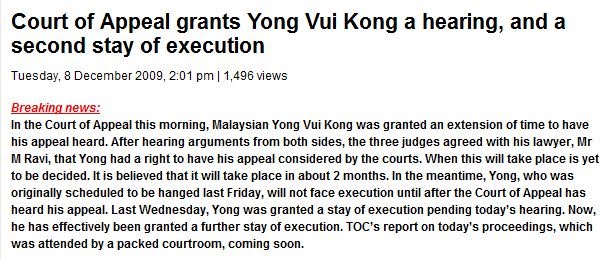
While I was very intrigued by the Social Constructionist position, my friend opined that it  has contributed nothing new or substantiate enough to change the world. The context of his argument came from his personal experiences and belief that this movement has  not helped to bring the world a step further towards eradicating the oppression of the marginalized groups in today's societies. For instance, developed countries like Singapore still retain archaic Victorian law against homosexuality handed down from the Colonial period, even though where it came from, UK, has long repealed it in the last century. To my friend, the way forward for a more long-lasting way for decriminalization of homosexuality in a country, is to win over a majority of public opinions. He also spoke about his discomfort with the use of emotions in the form of public sympathy, such as that with a Malaysian, Yong Vui Kong, from drug trafficking in Singapore. Instead of asserting a judicial call against death sentence, Court of Appeal granted Yong Vui Kong a hearing, and a second stay of execution on 8-December-2009. (Click here for link to article below)
On reflection, I can see my friend's point about wanting a fundamental shift in a societal position based on compassion and depth in understanding, as moving people towards embracing multiple perspectives does not eradicate the risk of still having one dominating others based on its position, power and influence within that society.

Meanwhile, my friend seems to have the belief that changes that take effort from emotional appeal is less sustainable than a change from the legal constitution. In my view, they are  actually interconnected. Many a times, strong emotions precipitate crises that perturb a current state to the extent that public opinions may shift to a new and more comfortable position. A documentary-drama I watched illustrates this point. It featured Peter Wildeblood, a diplomatic correspondent of Daily Mail, who, in 1954, became the second public person in UK since Oscar Wilde to be sentenced to 18 months of imprisonment for buggery. Peter’s imprisonment stirred public's outcry, especially after his inprisonment, he campaigned publicly for the rights of gays and testified before the Wolfenden Committee. The Committee report in 1957 recommended that homosexual acts between consenting adults in private be legalized. This recommendation was passed in the UK law in 1967. 
 

Screen shorts from a Channel 4 documentary drama featuring Peter Wildeblood, entitled “A Very British Scandal”

Two online references Peter Wildeblood: Click A or B.

How is this relevant to family therapy? Stories of courage drawn from the clients or communities could be thickened via therapy sessions to amplify strengths.  Telling stories unravel emotions. Reading the feelings underneath the expressed emotions help draw the underlying meaning attached to belief systems which help families and therapists understand how they impact the relationships within the family in their cultural context. 

My friend also shared an encounter where he was invited for dinner by an Indian male friend. While the two men were eating, my friend noticed the Indian wife, who cooked and served the food, standing by a corner. He invited her to join them at the dining table but she declined. Most people at this point would have jumped into conclusion to think - how dare the husband treat the wife like a maid? Such unfairness for women in such a culture with total lack of gender equality!

What happened then was that after declining, the wife asked my friend how he found the food. My friend praised  and thanked her for it. Immediately he could see the wife smile and her face was lit up with bliss. This incident made my friend realise that what bring happiness to the wife is not to join the husband and guest at the dining table but to be appreciated for her cooking. Who is he to judge the gender inequality in her culture to be problematic if it serves a function  without her or anyone suffering or being exploited? 

To me, this is where the social constructionist perspective is helpful. It informs me that I am in no position to be at a moral higher ground than anyone else. What is more important is to start with an open mind, accompanied by a non-judgemental curiousity to listen and observe before drawing conclusions or connection with my personal experiences and values. This is especially important when we face people from a different culture from us, regardless of race,  socio-economic status or class, gender, sexual orientation, religion, national origin, language, political orientation, disability or age*.

* A combination of the differences stated in the Codes of Ethics for the Singapore Association for Counselling and the UK Association for Family Therapy and Systemic Practice.

Sunday, 13 December 2009

Reflections at End of Term 1

What has happened to the part of me I brought with me to London 

In Clinical Skills Seminar I was given the task to review of where I am now coming to the end of the term, in reference to the symbolic cultural item we brought to the clinical skills class at the beginning of the term. I thought of taking this reflecting diary as an opportunity to do this piece of reflection.

The item I brought to class was brown rice - while white rice is a staple food in Singapore, I purposely brought brown rice as it represents the coarse (not so refined) culture of my country, i.e. in my view the social aspect is less developed than the economy. At a personal level, I experienced the ease of being who I am and sharing about who I am here in London, as compared to back in Singapore, where the dominant culture has too superficial distinction between what is black or white, right or wrong, good or bad.  It gives me strength in dealing with challenges by bringing my learning home. At the professional level, I have gained a clearer chronological understanding of the development and approaches of family therapy, as well as the first hand experience of what systemic means through my placement. There are however, still many concepts and approaches that I have yet grasped fully and would have to continue to persevere.

Portfolio 

It was great to have a reference point of how a portfolio looks like via my supervisor's sharing of hers. A few key points worth noting down here:

Adaptation from supervisor's style:

· split the critical learning points from the clinical log like the way she did, as it gives more room for the learning points to be presented than being cluttered with other facts of the log;
· split the logs and clinical learning points by months like the way she did, as herslooks really more organised and neat;
· add a page that decodes my abbreviation;
· add in more reflection, eg. reflection from feedback from assignment, reflection of my reflection, where deemed necessary.

New ways of improving my portfolio:
· I will add a one-page summary of the number of clinical hours and non-clinical hours clocked for it to be presented clearly;
· Under "configuration", instead of just specifying those who attended the session, I would include all of whom are deemed to be “Significant Others” as important persons to be involved in systemic work but may not be willing or available to attend sessions;
· Instead of just race, I will also insert specific cultural facts about the family known and important eg. class, sexuality, sole-parenthood, etc.